Children of any age can have trouble settling at night. Whether it’s a tiny baby working through their normal night-time feed schedule, a toddler with an overactive imagination, or an older child battling a sudden fear of the dark, we’ve all been there, pacing the floor at our wit’s end.
If you’re looking to calm the chaos, the secret often lies in the environment. Here are three ways to create a more soothing space for your little one, grounded in the expert safety advice from the folks at The Lullaby Trust.
1. Wind Down with Purpose
The hour before bed is the most important part of the routine. If you go from 100mph racing games to “straight to bed,” it’s no wonder they’re struggling to settle!
Instead, switch to low-energy activities. Think puzzles, quiet colouring, or a calm storytime. And yes, a cheeky book like Farmyard Farts definitely counts—just try to keep the tone steady and soothing. The cadence of your voice is a powerful tool to signal that the day is well and truly done.

2. Lighting and Sound (The Sensible Way)
A gentle nightlight can be a lifesaver for toddlers dealing with shadows and “monsters.” We’re big fans of the Tranquil Penguin because it does the heavy lifting for you. It projects a soothing underwater light effect onto the ceiling and plays calming sounds like whale songs or ocean waves. It’s perfect for creating a peaceful, “oasis” vibe that helps them drift off without needing you to stand guard.
A quick note on sound: Many parents swear by white noise machines to mask the sound of a creaky house or an ambulance siren outside. The Lullaby Trust suggests that if you use one, keep it at a moderate volume (roughly the level of a whisper) and ensure it’s at least two metres away from the cot. It’s not about blasting it; it’s about creating a consistent, gentle background hum.

3. Understanding “Co-Sleeping” vs. Room Sharing
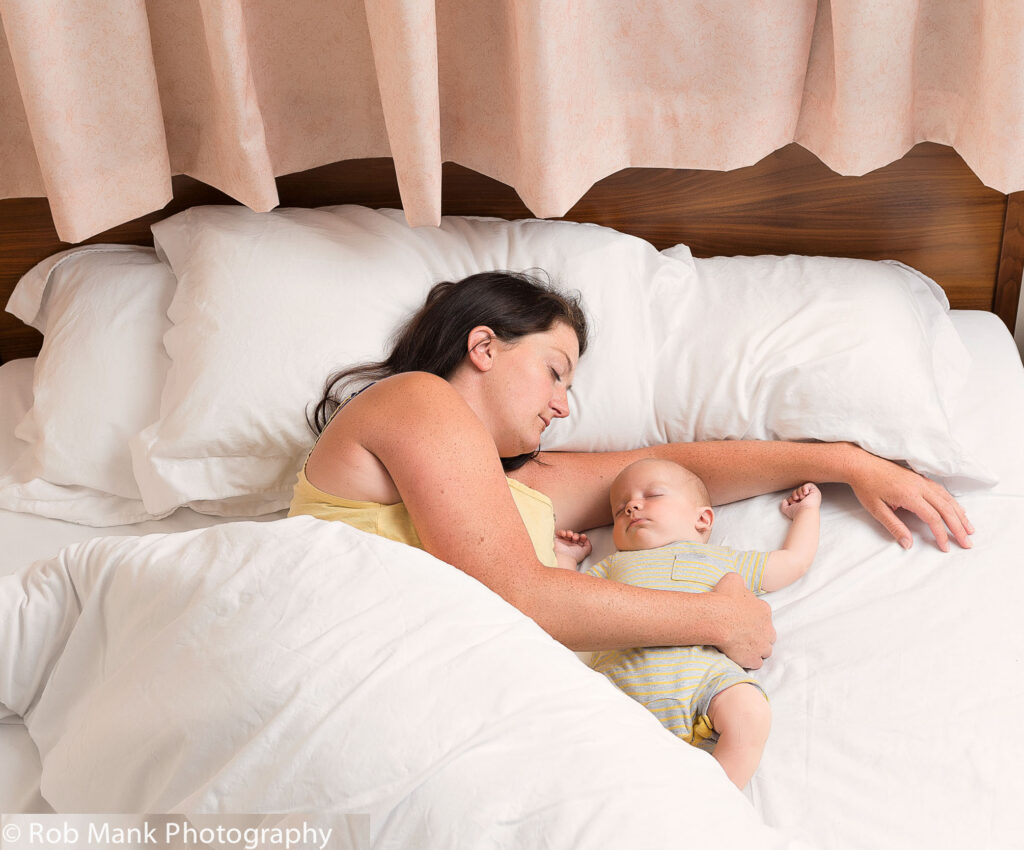
This is the big one. We often hear parents talk about “co-sleeping” as the only way to get some rest. However, it’s vital to distinguish between room-sharing and bed-sharing.
The Lullaby Trust advises that the safest place for a baby to sleep for the first six months is in their own clear, flat, separate sleep space (like a cot or Moses basket) in the same room as you. This keeps them close enough for you to respond to their needs quickly—including those essential night-time feeds—but ensures they have a safe, breathable environment of their own.
If you do find yourself bed-sharing, it’s essential to be aware of the risks—especially if you or your partner smoke, drink alcohol, or are extremely tired, as these significantly increase the risk of SIDS. Never sleep on a sofa or armchair with your baby, as this is incredibly dangerous. Always prioritize a firm, flat, and clear surface for them, and keep those pillows and duvets well away from their head.
The Bottom Line Creating a soothing environment is about consistency. By keeping the pre-sleep hour calm, choosing the right lighting (and a very cute penguin), and ensuring their sleep space is as safe as it is comfortable, you’re setting yourselves up for a much better night’s sleep.
And if you’re still not sleeping? Well, at least you’re not alone. We’re all just doing our best!